


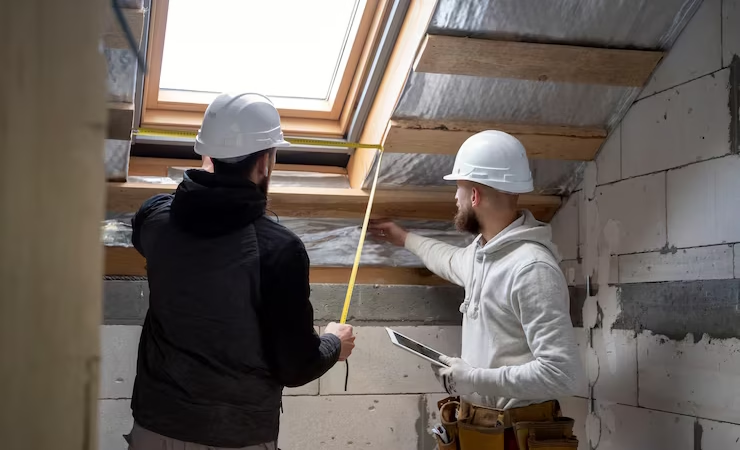
Turning your unused loft into a bright, livable space is one of the best ways to add value to your home. But before you start decorating, it’s crucial to make sure your loft conversion is structurally sound. Every successful project starts with a strong foundation and that includes beams, load-bearing walls, and safe floor reinforcements.
At Ecoden Constructions, our team of structural engineers in the UK helps homeowners and contractors plan, assess, and execute loft conversions with precision. Here’s how to identify and handle the most common structural challenges.
Understanding Structural Challenges in Loft Conversions
A loft conversion changes how weight is distributed across your home. What was once an empty attic now needs to support furniture, flooring, and people. If the structure isn’t reinforced correctly, you could face sagging ceilings, wall cracks, or even safety risks.
That’s why having a loft conversion structural engineer in the UK involved early is essential. A professional engineer ensures your plans meet UK building regulations (Part A, B, and beyond) and provides the calculations needed for your building control application.
1. Assessing Load-Bearing Walls
One of the first steps in any loft conversion is identifying load-bearing walls. These walls support the structure above and below, so removing or altering them without proper support can cause serious problems.
Our engineers at Ecoden use site surveys and existing drawings to locate these walls. When a load-bearing wall removal is needed, we design a safe solution using steel beams (RSJs) or timber joists to redistribute the weight effectively.
Signs a Wall Is Load-Bearing
- The wall runs perpendicular to floor joists
- It’s located directly above or below another wall
- It supports beams or structural timbers
Even if a wall looks thin or non-load-bearing, it’s always best to have it checked by a qualified structural engineer before making any changes.
2. Installing Steel Beams (RSJs) the Right Way
Almost every loft conversion requires steel beams to carry new loads. Known as Rolled Steel Joists (RSJs), these beams support the floor and roof structure once the loft is opened up.
At Ecoden, we calculate steel beam requirements based on:
- The type and size of your loft
- The load from new flooring and furniture
- The position of new dormers or roof windows
- The condition of existing walls and joists
Typical Beams Used
- Primary Beams (Spine Beams): Run across the middle of the loft to support new floor joists.
- Secondary Beams: Distribute loads evenly to the external walls.
- Roof Support Beams: Reinforce the structure when removing old rafters.
Incorrect beam sizing is one of the most common causes of loft issues — from uneven floors to cracked ceilings. With a structural engineer’s drawings and calculations, you’ll get the exact specifications needed for safe installation.
3. Creating Accurate Structural Drawings
Every loft conversion project in the UK requires structural drawings for approval. These detailed plans show where beams, joists, and supports will go.
At Ecoden Constructions, we provide structural drawings for loft conversions across the UK that comply with Building Regulations and local authority standards. These drawings are not just paperwork they’re the foundation for safe construction and accurate costing.
What’s Included in Structural Drawings
- Load paths and beam layouts
- Joist direction and sizes
- Connection details for steel and timber
- Calculations certified by a structural engineer
With precise drawings, your contractor can build confidently, and inspectors can easily verify compliance.
4. Managing Party Wall Issues
If your property shares a wall with a neighbour, you’ll need to address party wall issues before starting work. Under the Party Wall etc. Act 1996, any structural changes that affect a shared wall or boundary require formal notification.
When You Need a Party Wall Agreement
- Inserting beams into a shared wall
- Raising the height of a party wall
- Excavating near a neighbour’s foundations
Our UK structural engineers can prepare the necessary Party Wall Notices and help you communicate with surveyors. Handling this early avoids disputes and keeps your project on schedule.
5. Meeting UK Building Regulations (Part A, B, and Beyond)
Every loft conversion must comply with Building Regulations, which ensure safety, stability, and energy efficiency. The key sections affecting structure include:
- Part A – Structure: Covers load-bearing capacity, deflection, and beam design.
- Part B – Fire Safety: Ensures proper escape routes and fire-resistant materials.
- Part C – Moisture Protection: Prevents damp and condensation.
- Part L – Energy Efficiency: Sets standards for insulation and glazing.
Ecoden engineers guide you through each regulation step-by-step, ensuring your design is compliant and ready for inspection. Our focus is on balancing safety with cost-effective solutions.
Ready to discuss your project?
Contact Us today to book your structural survey or consultation and take the first step toward a safer, smarter loft conversion.
6. Working with a Loft Conversion Structural Engineer in UK
Whether you’re a homeowner adding value to your property or a contractor managing multiple projects, having a dedicated structural engineer makes all the difference.
At Ecoden Constructions, our engineers specialize in loft conversions across UK and the North West, offering:
- Site visits and surveys
- Full structural calculations
- Detailed drawings for Building Control
- Ongoing technical support during construction
Benefits of Hiring a Structural Engineer
- Prevent costly structural mistakes
- Speed up Building Control approval
- Improve project accuracy
- Increase long-term property value
We collaborate with architects and builders to make sure your loft conversion is not just visually appealing — but structurally perfect.
Common Structural Issues We Solve at Ecoden
Our UK clients often call us to resolve challenges such as:
- Insufficient floor joists for new loads
- Roof sagging due to removed supports
- Cracks forming in ceilings below the loft
- Poorly aligned or undersized beams
- Missing or incorrect structural drawings
Each case is unique, but our approach is always the same: assess, calculate, and reinforce safely. We combine modern tools like laser surveys and CAD modeling with decades of hands-on construction experience.
Why Choose Ecoden for Loft Conversion Engineering
At Ecoden Constructions, we’re more than just contractors, we’re trusted structural experts who understand every stage of the conversion process. From your first consultation to final sign-off, we manage every structural detail with care.
Our Promise
- Clear communication and transparent pricing
- Expert engineers with local UK experience
- 100% compliance with UK Building Regulations
- Safe, reliable, and long-lasting results
Our portfolio includes projects in UK, Stockport, and surrounding areas — each tailored to fit the property’s unique structure.
Conclusion: Start Your Loft Conversion the Right Way
Every loft conversion starts with a vision but only succeeds with solid engineering. By working with a qualified loft conversion structural engineer in UK, you protect your home, meet regulations, and create a beautiful space that lasts for years.
At Ecoden Constructions, our team brings together design creativity and engineering precision to make your loft conversion safe, efficient, and compliant from day one.
FAQ:
Q1: Do I need a structural engineer for a loft conversion in UK?
A: Yes. A structural engineer ensures your loft can safely support new loads, meets Building Regulations (Part A), and provides certified calculations for approval.
Q2: How much does a structural engineer cost for a loft conversion?
A: Costs in UK typically range from £500 to £1,200, depending on project size and complexity. Ecoden offers clear, fixed-fee pricing for peace of mind.
Q3: What are the steel beam requirements for a loft conversion?
A: Most lofts need RSJ (Rolled Steel Joist) beams to support new floors and roofs. The exact beam size and position depend on your load calculations and layout.
Q4: Can I remove a load-bearing wall during a loft conversion?
A: Yes, but only under a structural engineer’s supervision. Engineers design support beams or joists to redistribute weight safely and prevent structural failure.
Q5: How do I handle party wall issues when converting a loft in a terraced house?
A: You must serve a Party Wall Notice if work affects a shared wall. Ecoden helps prepare notices, manage communication, and ensure compliance with the Party Wall etc. Act 1996.
Q6: How long does structural design approval take in UK?
A: Most Building Control reviews take 2–4 weeks, depending on document completeness. Having precise Ecoden structural drawings can speed up the process.
Q7: What happens if I skip structural calculations in my loft conversion?
A: Skipping calculations risks serious safety issues, project delays, and failed inspections. A certified engineer’s calculations are mandatory for legal compliance and safety.