


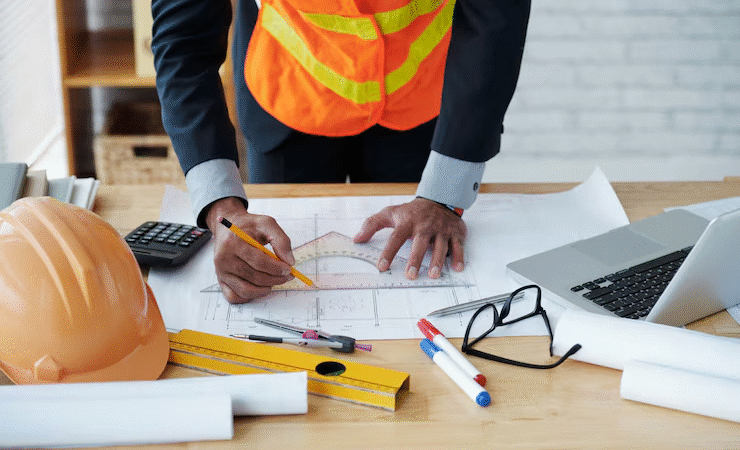
Sustainable structural design is no longer niche or optional in the UK. It is a necessity. In this blog, we explore how engineers, architects, and construction professionals along with specialists offering structural drawing services can adopt truly green approaches by integrating innovation, regulation, and practical strategy.
We follow a clear roadmap: principles, innovations, regulatory context, future outlook, and actionable guidance..
Understanding Sustainable Structural Engineering
What defines sustainable structural engineering in today’s UK context
Sustainable structural engineering means designing, constructing, and maintaining the load-bearing framework of buildings (and infrastructure) in a way that minimizes negative environmental impact while maximizing performance, safety, and longevity.
In the UK context, this involves:
- Reducing embodied carbon: The carbon emitted during material production, transport, and construction.
- Minimizing operational energy: Ensuring the structure supports low energy use in heating, cooling, ventilation.
- Resource efficiency: Using materials with low waste, responding to circular economy principles.
- Resilience and adaptation: Accounting for climate change, flood, wind loads, and future modifications.
A sustainable structural design must balance all these goals without compromising structural integrity or service life.
Key drivers behind the UK’s green building revolution
Several pressures and motivations are pushing sustainable structural engineering forward in Britain:
- Government and regulatory commitments: The UK has net zero emissions targets and policies pushing greener buildings.
- Energy cost trends and operational savings: Lower energy bills make efficient designs financially attractive.
- Client demand and market differentiation: Developers and owners increasingly want “green credentials.”
- Innovation in materials and construction technology: New options open more possibilities.
- Risk management: Buildings that lag sustainability may face future regulatory or retrofit penalties.
These drivers combine to make sustainable structural design not just ethically desirable, but commercially essential in the UK.
Core Principles of Eco-Friendly Structural Design
Integrating renewable and low-carbon materials
One of the most direct levers is in your material choices. Key strategies include:
- Timber and engineered wood: Cross-laminated timber (CLT), glue-laminated timber (glulam), and laminated veneer lumber (LVL) can replace steel or concrete in many structural roles.
- Recycled content and secondary materials: Use recycled steel, fly ash or slag in concrete mixes, reused bricks or aggregate.
- Low-carbon concrete alternatives: Geopolymer concrete, high-volume supplementary cementitious materials (SCMs) like fly ash or GGBS, and lower clinker cements.
- Natural materials: Bamboo, hempcrete, straw bale (in non-load zones) or mycelium-based composites in appropriate contexts.
When selecting these materials, one must consider sourcing distances, lifecycle emissions, durability, and maintenance requirements. For expert guidance on choosing the right eco-friendly materials or detailed structural drawing services tailored to sustainable projects, contact us at Ecoden Constructions our team can help you design structures that are strong, efficient, and environmentally responsible.
Energy-efficient design and life-cycle thinking
It is vital to think beyond just the structure itself. Good sustainable structural design embraces a life-cycle lens:
- Early collaboration (integrated design): Structural engineers, architects, energy modelers must work together from day one.
- Passive design principles: Orientation, shading, thermal mass, daylighting—all structural choices can support energy efficiency.
- Thermal bridging mitigation: Careful detailing to avoid heat loss through structural elements.
- Service integration: Embedding ductwork, piping, and renewable energy systems (e.g., solar, heat pumps) in structural design to reduce retrofit friction.
- Deconstruction and adaptability: Designing structures so they can be disassembled or modified easily in future, facilitating reuse of materials or spaces.
Balancing performance, durability, and sustainability
A sustainable structure must still meet all safety, durability, usability, and maintenance requirements. Some key balancing acts:
- Strength vs carbon cost: Sometimes over-specifying a higher strength material leads to greater embodied carbon — optimal sizing matters.
- Durability under UK climate: Designs must resist moisture, freeze–thaw cycles, corrosion, and long-term wear.
- Maintenance cycles: Structural solutions that demand frequent upkeep may offset sustainability gains.
- Redundancy and safety margins: Always maintain sufficient safety cushion — sustainability should never reduce structural assurance.
- Cost vs benefit: Some green measures may raise initial costs, but lifecycle payback and value in green certification often justify them.
In practice, sustainable structural design is a careful optimization problem, balancing multiple criteria.
Emerging Innovations in Sustainable Construction
Modern methods of construction (MMC) and prefabrication
Modern methods of construction (MMC) include volumetric modular, panelised systems, and hybrid approaches. Their benefits for sustainability include:
- Less waste on site: Factory environments yield precise cuts and reduced on-site waste.
- Speed and efficiency: Faster build time reduces site overheads and emissions.
- Better quality control: Prefab elements can be more precisely manufactured and tested.
- Transported modules: While transport has a carbon cost, the net gain from reduced waste and speed often outweighs this.
In the UK, MMC is increasingly encouraged through policy, especially for housing delivery and publicly funded projects.
Smart materials and AI in structural optimization
Innovation in materials and computational tools is transforming structural design:
- Shape-memory alloys / smart composites: Materials that adapt under load or environment, potentially reducing material use.
- Self-healing concrete: Embedded bacteria or healing agents that repair microcracks, prolonging life.
- Graphene-enhanced materials: Additives for strength improvement or conductive properties.
- Generative design & AI optimization: Machine learning algorithms can propose optimal structural forms (topology optimization) that use less material while satisfying constraints.
- Sensor-embedded materials: Structural health monitoring embedded in materials, enabling predictive maintenance.
These tools allow more radical and efficient structural forms than ever before.
The role of digital twins and BIM for sustainability
Digital tools are essential in modern sustainable structural design:
- Building Information Modelling (BIM): Structural models integrated with architectural, MEP, and sustainability data permit clash detection, energy modeling, lifecycle analysis.
- Digital twins: A real-time virtual counterpart to the physical structure, enabling performance tracking, energy optimization, and predictive maintenance.
- Parametric modeling and simulation: Rapid iteration and evaluation of structural options based on multiple trades (strength, emissions, cost).
- Lifecycle data feedback loops: Performance data from the structure is fed back into the digital model, improving future designs.
These capabilities tighten the feedback loop between design intent and actual performance.
UK Building Regulations and Standards for Sustainable Design
Overview of UK sustainability frameworks (BREEAM, Part L, etc.)
To practice sustainable structural design in the UK, you must navigate the regulatory frameworks:
- Part L (Conservation of Fuel and Power): Sets minimum energy efficiency standards for buildings. Structures must support the necessary insulation, airtightness, and thermal performance.
- Building Regulations (UK): Structural safety, fire, accessibility, and durability requirements still must be met first.
- BREEAM (Building Research Establishment Environmental Assessment Method): A national scheme evaluating buildings across many sustainability categories (energy, materials, waste, etc.).
- RIBA 2030 Climate Challenge: Targets for operational energy, embodied carbon, and potable water use across project stages.
- PAS 2080 (Carbon Management in Infrastructure): Framework for managing carbon across infrastructure projects.
- CEN / Eurocodes + British Standards: Ensure structural safety while allowing new materials and methods.
Designers must align innovative structural approaches with these requirements.
Compliance challenges and practical strategies
Bridging ambition and compliance is often challenging. Here are strategies:
- Early regulatory review: Engage Building Control officers early so novel proposals are acceptable.
- Use proven materials or hybrid systems: Combine new approaches with accepted ones to reduce risk.
- Robust documentation and modeling: Detailed energy, emissions, and structural models support regulatory approval.
- Mock-ups and test pieces: Demonstrate performance (e.g. thermal bridging, moisture control) to building officials.
- Phased certification approach: Aim first for compliance, then stretch toward BREEAM or RIBA 2030.
- Continuous iteration: Use feedback from site, supplier, and regulatory loops to refine designs.
With careful planning, compliance need not stifle innovation; they can walk hand in hand.
The Future of Sustainable Structural Design
Upcoming technologies shaping the next decade
The coming decade promises even more radical sustainability tools:
- Ultra-light structures: Use of tension membranes, thin shells, or advanced composites to reduce material volumes.
- Bio-inspired structures: Designs mimicking nature’s efficiency (e.g. tree branching, bone structures).
- Carbon capture materials: Concrete or composites that absorb CO₂ over time.
- Additive manufacturing (3D printing): Printing structural elements custom on site from optimized geometry.
- Nanomaterials: Ultra-strong, high durability materials allowing thinner, lighter sections.
- Blockchain and material tracing: Transparent supply chain verification of embodied carbon and material provenance.
These will push the boundaries of what is structurally, economically, and ecologically possible.
The architect’s and engineer’s evolving role
As these innovations mature, roles will shift:
- Engineers become performance integrators, not just dimensioners they must consider carbon, adaptability, data.
- Architects will increasingly think structurally from the start, blurring boundaries.
- Both must adopt data literacy, sustainability fluency, and collaboration across disciplines (energy, materials science, digital).
- Continuous learning becomes mandatory — staying current with new materials, codes, and computational tools.
In essence, the design team becomes a sustainability atelier, not just a building factory.
Conclusion
Why embracing sustainable structural design matters now more than ever
The UK is in the midst of a green transition. Climate targets, energy cost volatility, regulatory pressures, and client demand all push the built environment to change. Structural design sits at the foundation literally of that transition. A sustainable structure is not just better for the planet; it’s more resilient, future-proof, and valuable.
Actionable steps for UK design professionals
- Adopt an integrated design process from day one.
- Evaluate embodied carbon in all material choices.
- Use MMC, prefabrication, or modular strategies to reduce waste.
- Leverage BIM, simulation, and AI tools to optimize design.
- Engage building authorities early for approval of novel solutions.
- Monitor building performance post-occupancy and feed data back into design.
- Invest in continuous education on new materials, codes, and methods.